From Shukto to Kosha Mangsho: A Guide to Bengali Food for Every Occasion
A Bengali meal is a sequence, not a spread. What each course is for, and how the right menu changes from a wedding to a puja to a Sunday lunch.
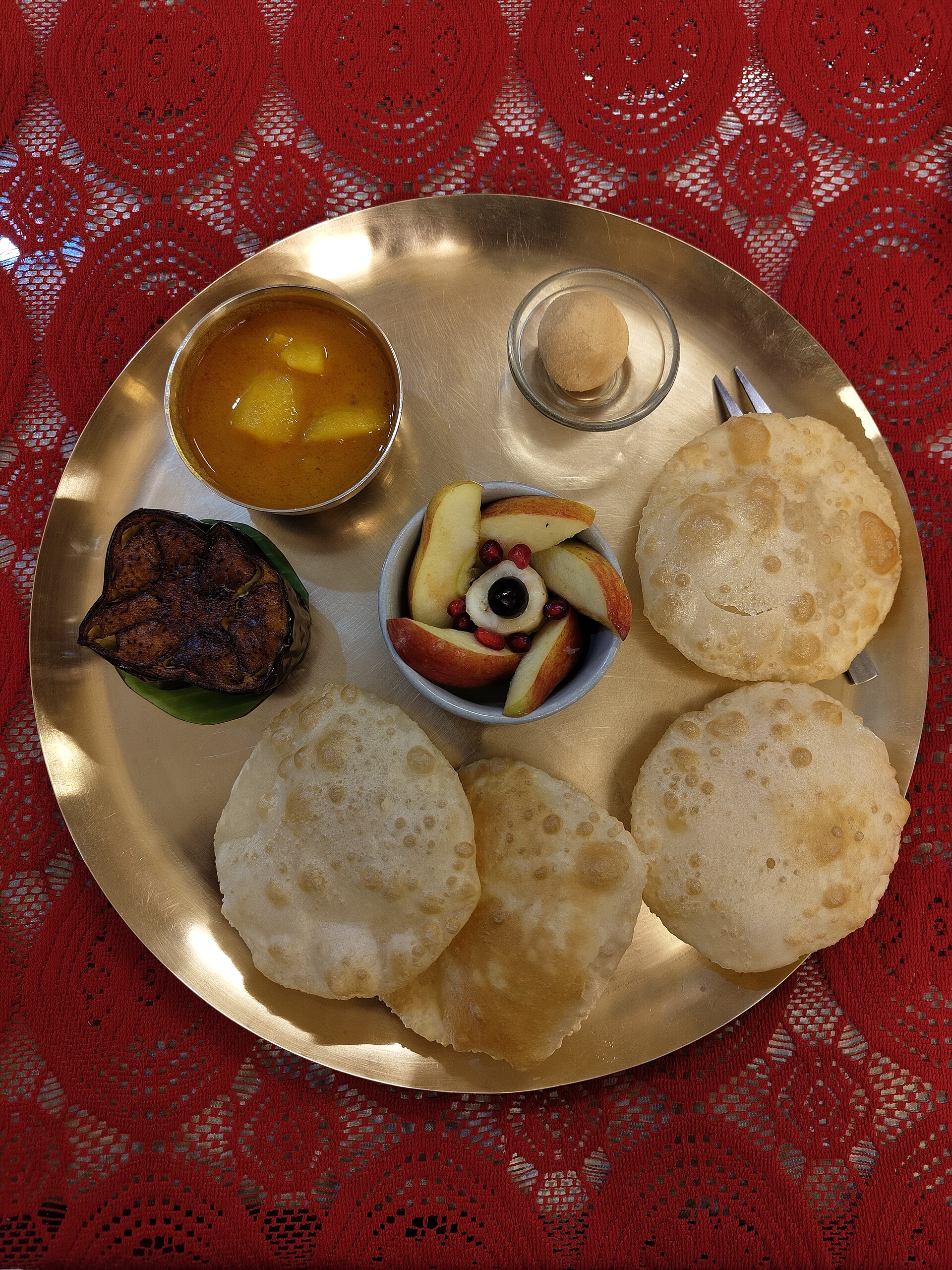
Ask someone from Bengal what makes a Bengali meal Bengali and you will rarely get a list of dishes. You will get an order. The bitter thing first, then the dal, then the vegetables, then fish, then — if the occasion warrants it — meat, and then, without exception, something sweet. The sequence is older than any individual recipe in it, and it is the reason a Bengali spread feels different from a North Indian one even when half the ingredients overlap.
This matters practically, not just culturally. When people plan a menu for a wedding, an annaprashan or a puja, they usually plan it as a collection of favourites. A Bengali menu planned that way tends to be heavy at the start, repetitive in the middle and short of anything to clear the palate. Planned as a sequence, the same number of dishes feels lighter, moves faster and leaves people able to eat the sweet at the end.
What follows is a working guide: what each course is for, which dishes belong where, and how the answer changes depending on whether you are feeding forty people at home or eight hundred at a wedding.
The shape of a Bengali meal
A full Bengali meal is served in courses on a single plate, each one added as the previous is finished. Rice sits at the centre throughout. Everything else arrives around it in order, and the order runs from bitter to sweet.
Why it begins with bitter
Shukto, the mixed vegetable dish that opens a formal Bengali meal, is mildly bitter by design — usually from bitter gourd, sometimes from neem or bitter greens. The traditional explanation is digestive; the practical effect is that it resets the palate before anything rich arrives. It is also, quietly, the dish that tells you whether a kitchen knows what it is doing. Shukto should be bitter enough to register and not so bitter that anyone leaves it, thickened with milk or poppy seed paste, finished with a whole-spice tempering. It is easy to make badly and difficult to make forgettable.
The middle: dal, bhaja, and the vegetable dishes
After the bitter opening comes dal — most often a light musur dal or a cholar dal with coconut on festive days — served with something fried alongside. Begun bhaja (aubergine slices, fried), alu bhaja, potol bhaja, and on special occasions luchi, the puffed white-flour bread that turns any meal into an event.
Then the vegetable preparations proper: alu posto with poppy seed, dhokar dalna, echorer dalna made with green jackfruit, mochar ghonto from banana flower. These are not side dishes in the Bengali scheme. On a niramish day they are the meal.
Fish, and then meat
Fish is the centre of gravity. It arrives after the vegetables, usually as two preparations rather than one — a lighter curry and a richer one. Meat, where it appears, comes after fish, not instead of it.
The close
Chutney, usually tomato-date or mango-raisin, served warm and sweet-sour, with papad. Then mishti: rosogolla, mishti doi, sandesh, payesh. The chutney is not a condiment; it is a course, and it exists to make room for the sweet.
Understanding this shape is most of the work. The rest is choosing what goes in each slot.
Rice: the decision people skip
Rice is treated as a default and it should be treated as a choice, because it sets the weight of everything else on the plate.
Plain steamed rice is correct for most everyday and mid-scale occasions. It carries dal and fish curry without competing.
Gobindobhog is the short-grain aromatic rice used for khichuri and payesh. Its smell fills a hall. It is the right rice for a puja bhog and the wrong rice to serve under a heavy mutton curry.
Basanti pulao — sweet, yellow, studded with cashew and raisin, scented with ghee — is the celebration rice. It is what goes under prawn malai curry or kosha mangsho at a wedding. It is also rich, and a menu that includes basanti pulao should lighten somewhere else.
Khichuri belongs to rain, to Durga Puja bhog, and to any occasion where a single-vessel meal is the point. Served with labra, begun bhaja and a fried papad, it is complete on its own, which makes it the most reliable choice for a large community meal.
Fish: what to serve and when
Almost every question about a Bengali menu eventually becomes a question about fish. Here is the practical map.
Bhetki
Boneless, firm, mild. Bhetki is the diplomat of Bengali fish: it works for guests who are nervous about bones, it fries well for a fish fry or paturi, and it holds its shape in a curry. For a mixed-guest event in Bengaluru where many people are eating Bengali food for the first time, bhetki is almost always the right first fish.
Rohu and katla
The everyday freshwater fish of Bengal, and the fish in most home kitchens. Machher jhol with rohu is the dish most Bengalis mean when they say they miss home food. Both have bones. At a large event with unfamiliar guests, serve them as a second fish rather than the only one.
Ilish
Hilsa, the fish Bengalis argue about. Seasonal, expensive, full of fine bones and worth every difficulty when it is good. Ilish belongs to the monsoon, to Jamai Shashthi, to menus where a small number of people will appreciate it properly. It is a poor choice for a five-hundred-plate service and an extraordinary one for a family dinner of twenty.
Chingri
Prawns, and specifically chingri malai curry — prawns in coconut milk, mild, rich, unmistakably festive. This is the wedding dish. Ask for the size of the prawn in writing when you book, because “prawn malai curry” covers a wide range of prawns and an equally wide range of prices.
Pabda, parshe, tangra
The small fish that home cooks love and caterers rarely offer at scale. If you see them on a menu for a small gathering, someone in that kitchen cares.
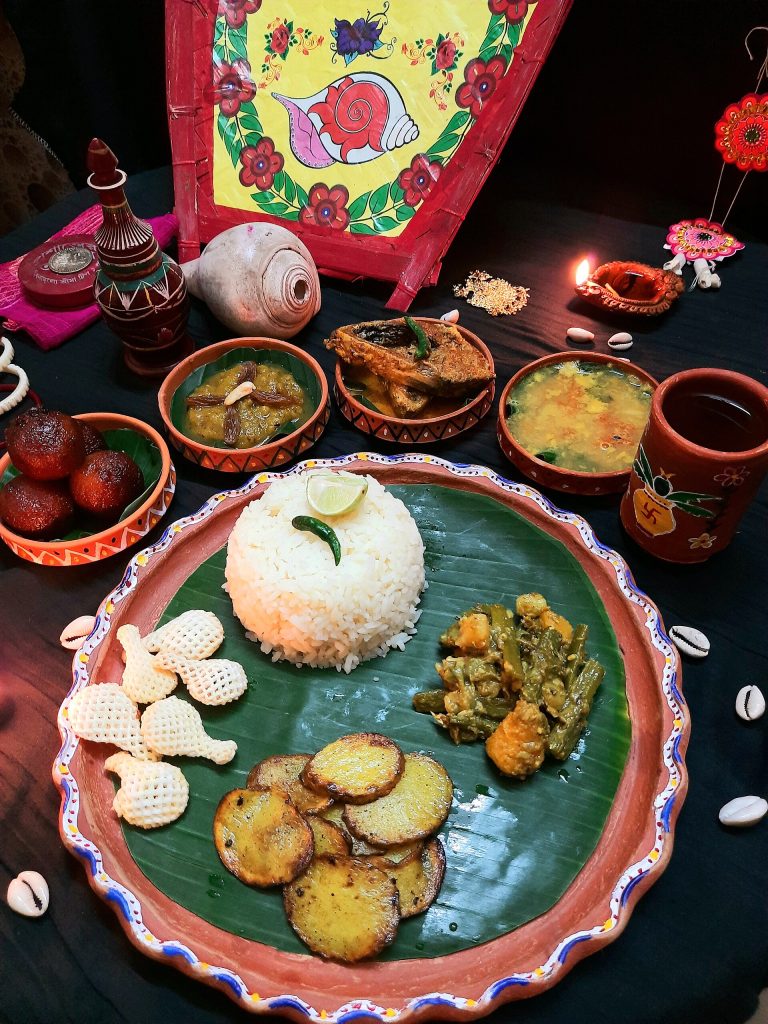
Meat: kosha mangsho and the biryani question
Kosha mangsho is slow-cooked mutton, reduced until the masala clings and the gravy is dark and thick rather than loose. It is a dish defined by patience: the kosha is the process of cooking the meat down with spices over low heat for a long time, and there is no shortcut that produces the same result. Served with luchi or basanti pulao, it is the single most requested Bengali dish at celebrations in Bengaluru, and rightly so.
It also scales well, which is worth knowing. Unlike fried fish, a kosha improves with a little holding time. If you are choosing one meat dish for a large event, this is the safe and the good choice at once.
Kolkata biryani is a different proposition: lighter on spice than Hyderabadi, scented rather than hot, and containing a potato that is not a filler but the point. Bengalis will judge a biryani by that potato. Chicken or mutton both work; the mutton version needs a longer window and a kitchen that has the vessels for it.
Chicken appears mostly as chicken kosha or a lighter chicken curry, and its main role at events is practical — it is the dish that accommodates guests who do not eat mutton without making them feel catered for as an afterthought.
Niramish: cooking without onion and garlic
A significant share of Bengali celebration food is niramish — cooked without onion and garlic, and often without meat. This is not a limitation, and a caterer who treats it as one will serve you a diminished menu.
The niramish repertoire is deep: cholar dal with coconut, dhokar dalna, alu posto, echorer dalna, mochar ghonto, phulkopir dalna in winter, luchi, basanti pulao, khichuri with labra. Ghee and ginger carry what onion would otherwise do, and the dishes are complete in their own right rather than adapted from something else.
Niramish is required for puja bhog, for many shraddha ceremonies, and often for one full day of a wedding. It is also what you serve when a large part of the guest list is vegetarian — which, in Bengaluru, it frequently is. Ask any caterer you are considering to show you a full niramish menu. The quality of that answer separates kitchens that cook Bengali food from kitchens that cook Bengali meat dishes.
Sweets, and why they are not optional
A Bengali meal without a sweet at the end is an unfinished meal. The core set is small and specific.
Rosogolla — chhena, boiled in light syrup, served cool. Fresh rosogolla and day-old rosogolla are different things, and everyone can tell.
Mishti doi — sweetened yoghurt set in earthenware, caramel-coloured, served chilled. It travels better than almost anything else on this list and is the most reliable sweet for a large event.
Sandesh — chhena pressed with sugar or jaggery. Nolen gurer sandesh, made with date-palm jaggery, is a winter thing and worth building a winter menu around.
Payesh — rice pudding with gobindobhog rice, thickened slowly. This is the birthday sweet, the annaprashan sweet, the sweet made at home for occasions that matter.
The practical note: chhena-based sweets have a short shelf life and should be made the same day. A caterer who sends rosogolla that has been sitting for two days is saving money in the place guests notice most.
Matching the food to the occasion
This is where the sequence above meets real life. Each occasion has its own logic, and the dishes that suit one are often wrong for another.
Weddings and receptions
A Bengali wedding is not one meal, it is a run of them, and they are not interchangeable. The aiburobhat before the wedding is deliberately homely — the food someone grew up eating, served as a farewell. The wedding day itself is usually niramish for at least part of the family, and the reception is the full festive menu: basanti pulao, a fish showpiece, kosha mangsho, chutney, a sweet counter.
The mistake at weddings is loading every meal equally. Three consecutive full-weight menus exhaust guests and the kitchen. Vary the weight deliberately — a lighter lunch before a heavy dinner, khichuri at one meal and pulao at another. For Bengali wedding catering in Bangalore, where guests are often travelling between venues across a large city and arriving at odd hours, that variation matters even more than it does in Kolkata.
Annaprashan
The rice ceremony. Payesh is not negotiable — it is the dish being celebrated. Around it, a moderate festive menu: luchi, a vegetable or two, a fish, chutney and sweets. Guest lists are usually family-sized, which means this is one of the few occasions where a more delicate fish, or a dish that must be served immediately, is actually practical.
Durga Puja and the festival calendar
Puja food is its own category. Bhog is niramish and usually khichuri, labra, begun bhaja, tomato chutney and payesh or a sweet — served to a large number of people over a short window, often outdoors. It is the most logistically demanding Bengali catering there is, and the menu is fixed by tradition rather than preference, which is a mercy.
Around the bhog, the pandal meals across the days of the puja are where variety belongs: fish fry and cutlets in the evening, biryani on one night, a full sit-down on Navami. Saraswati Puja brings its own set — khichuri again, and gota sheddho the following day. Lakshmi Puja and Kali Puja each have their own conventions. If you are catering for a Bengali association in Bengaluru, the committee will usually have a menu they have run for years; the useful conversation is about what can be improved within it, not about replacing it.
Griha pravesh and housewarmings
Often niramish, frequently in an apartment clubhouse with restricted kitchen access, and almost always at an awkward hour. The menu that works is one built from dishes that hold: cholar dal, dhokar dalna, alu posto, luchi, basanti pulao, a chutney and mishti doi. Save anything fried-to-order for the smaller evening gathering if there is one.
Birthdays and anniversaries
The most flexible occasion on this list, and the one where people most often ask for a mixed menu — some Bengali, some not. That is fine, and it is worth doing properly rather than apologetically. A workable structure: fish fry or cutlets as the opening, a biryani or pulao as the centre, one kosha, one vegetable, and payesh at the end because it is a birthday. Resist the urge to put both a biryani and a full rice-and-curry sequence on the same menu; they are two different meals.
Corporate events
Timing dominates. People eat in a forty-minute window, standing, often between sessions. Bengali food adapts well if you choose for it: dishes that are served rather than assembled, minimal bones, nothing that needs a knife. A boxed or counter-served menu of bhetki paturi or fish fry, chicken kosha, a pulao, a dal, one vegetable and mishti doi works far better than a full sequence nobody has time for.
Shraddha and remembrance ceremonies
Strictly niramish, prepared to the family’s own customs, which vary by community and region. This is not an occasion for creativity. The right approach is to ask the family exactly what is required, write it down, and follow it. A caterer who has done these before will ask you the questions rather than wait to be told.
Small gatherings at home
Twenty to forty people, a Sunday lunch, a family dinner. This is where the Bengali repertoire is at its best, because everything difficult becomes possible: ilish in season, small fish, a shukto made properly, luchi fried as people sit down. If you have never eaten Bengali food beyond a wedding buffet, this is the setting that will change your mind about it.
Season, and why it should decide half your menu
Bengali cooking is seasonal in a way that most celebration catering ignores, and the ignoring is usually visible on the plate.
Winter (November to February) is the good season and, conveniently, the wedding season. Cauliflower and peas are at their best, which brings phulkopir dalna and koraishutir kochuri into play. Nolen gur arrives, and with it the sandesh and payesh that are only worth making at this time of year. Richer dishes sit comfortably because the weather is cool — Bengaluru in December is genuinely pleasant, and a heavy menu at an evening reception works.
Summer (March to May) asks for the opposite. Lighter jhol rather than heavy kosha, more vegetables, a shorter menu, and serious attention to holding temperature. Basanti pulao and a coconut-heavy prawn curry at an outdoor lunch in April is a menu designed against the weather rather than with it.
Monsoon is khichuri season and ilish season, and both are worth planning around. A rainy-day menu of khichuri, ilish bhaja, begun bhaja and a chutney is unimprovable.
A caterer who suggests seasonal substitutions unprompted — swapping a winter vegetable out of a May menu, proposing a lighter fish for an afternoon event — is telling you something useful about how they cook. It is also, in our experience, the conversation that most improves a menu.
Building the menu: practical rules
Some numbers that hold up across most events.
- One bitter, one dal, two vegetables, two fish, one meat, one chutney, two sweets. That is a complete festive Bengali menu. Anything more is display rather than appetite.
- More dishes does not mean more food. Guests at a twenty-item buffet eat roughly what they eat at a twelve-item one, but they take a little of everything, waste more, and remember none of it clearly. A shorter menu cooked well reads as more generous, not less.
- Every menu needs one dish that is cooked to order. Luchi fried as people sit down, or fish fry from the pan. One is enough, and it transforms how fresh the whole meal feels.
- Count your vegetarians honestly. In Bengaluru this number is usually higher than the host expects, and a niramish menu of real depth is easier to build in advance than to improvise on the day.
- Do not put two rich coconut dishes on the same plate. Or two mustard-based ones. The sequence is meant to move; repetition stalls it.
- Leave the chutney in. It is the first thing cut for cost and the course that makes the sweet possible.
If you would like a starting point rather than a blank page, our published menus are built as sequences rather than lists, and each is grouped by course so you can see what a complete plate looks like before you change anything on it.
The dish that tells you the most
If you are ever trying to judge Bengali food quickly — a new restaurant, a caterer’s tasting, a friend’s recommendation — order the shukto and the mishti doi. One is at the beginning of the meal and one is at the end, neither is a showpiece, and both are difficult to fake. A kitchen that takes trouble over the two dishes nobody photographs is taking trouble everywhere.
That is really the argument of this whole guide. Bengali food is not a set of famous dishes; it is a way of putting a meal together, and the parts that carry it are often the quiet ones. Get the sequence right and the occasion right, and even a short menu will feel like a proper Bengali meal. Get them wrong and no amount of mutton will rescue it.
We cook this way for events across Bengaluru, from home gatherings of thirty to pujas and weddings running into the hundreds. You can browse our catering services by occasion, look through the full menu, or tell us your date and guest count and we will build a sequence around it. If you are still comparing options, our guide to choosing Bengali caterers in Bengaluru covers the questions worth asking, and the story of Bengali food in this city explains how it all got here.
Questions people actually ask
What is shukto?
A mildly bitter mixed vegetable dish that opens a formal Bengali meal, usually bittered with bitter gourd and thickened with milk or poppy seed paste. It is meant to reset the palate before the richer courses arrive.
What is kosha mangsho?
Slow-cooked mutton reduced with spices over low heat until the masala clings to the meat and the gravy is dark and thick. It is usually served with luchi or basanti pulao and is the most requested Bengali celebration dish.
What does niramish mean in Bengali cooking?
Food cooked without onion and garlic, and usually without meat. It is required for puja bhog and many ceremonies, and the repertoire is substantial in its own right: cholar dal, dhokar dalna, alu posto, luchi, khichuri with labra.
How many dishes should a Bengali wedding menu have?
A complete festive sequence is about one bitter dish, one dal, two vegetables, two fish, one meat, a chutney and two sweets. Longer menus rarely make guests eat more; they mostly increase waste.
Which Bengali dishes work best for large events?
Dishes that hold well: kosha mangsho, khichuri with labra, basanti pulao, cholar dal, dhokar dalna and mishti doi. Fried fish and luchi are best kept as the one item cooked to order.
Bring the Bengali table to your event
BongKnot caters Bengali and North Indian food across Bengaluru, from a seven-guest dinner to a wedding. Send us the date and the guest count.
Keep reading
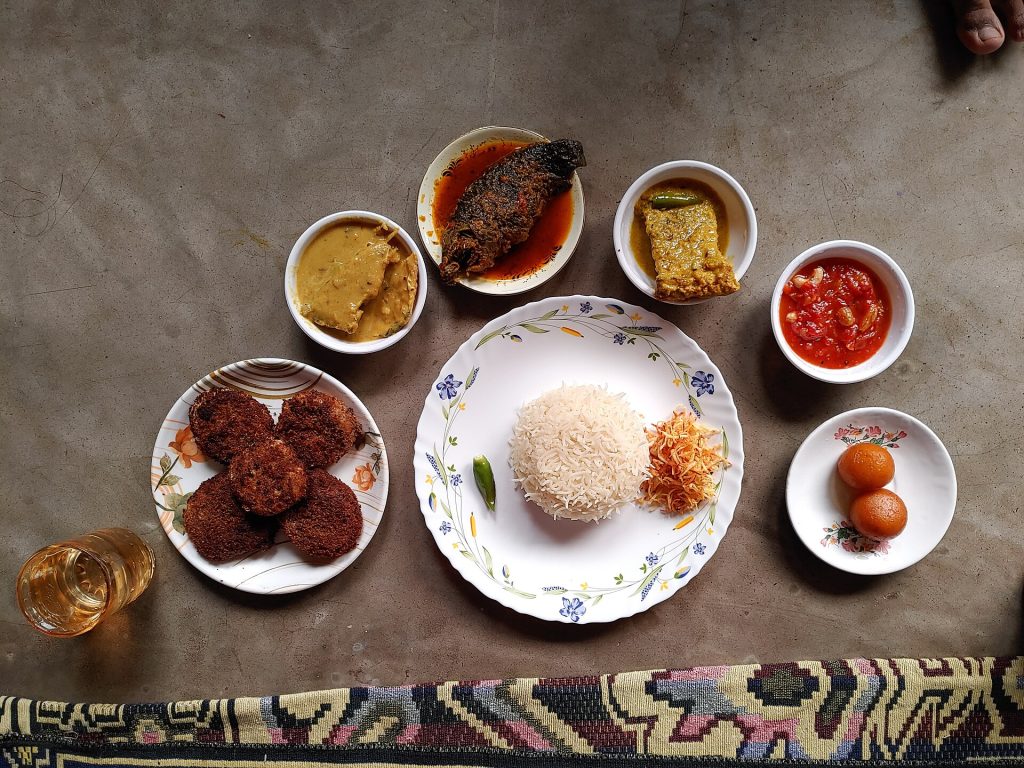
How to Choose the Best Bengali Caterers in Bengaluru for Your Next Celebration
The questions worth asking, how to read a quotation line by line, and the warning signs that are easy to miss until the day itself.
Read more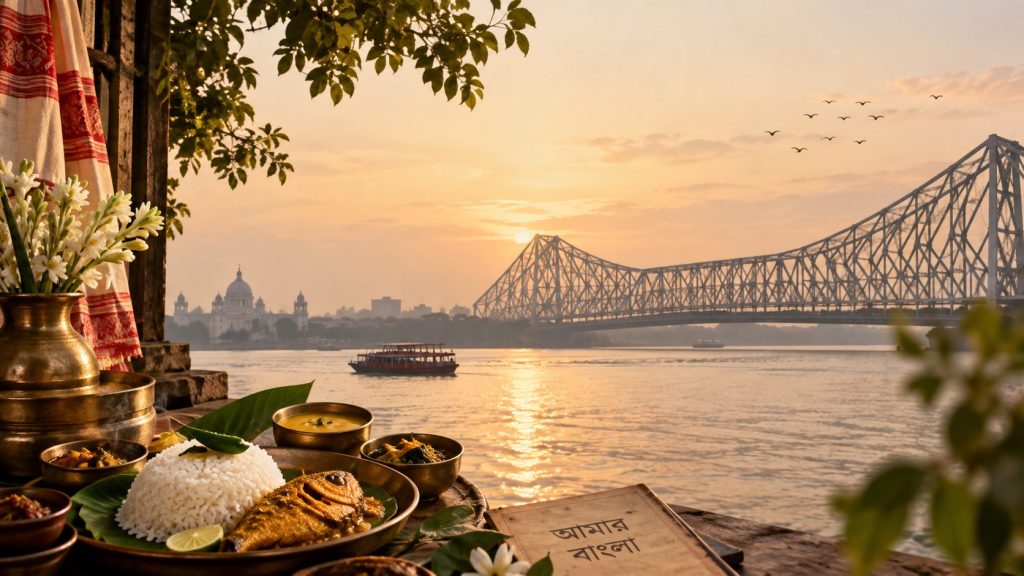
Bengali Food in Bengaluru: A Journey from Kolkata to the Garden City
How the food of Bengal travelled south, what changed on the way, and where to find the real thing in the Garden City today.
Read more